Skip to content
Flight Software Workshop
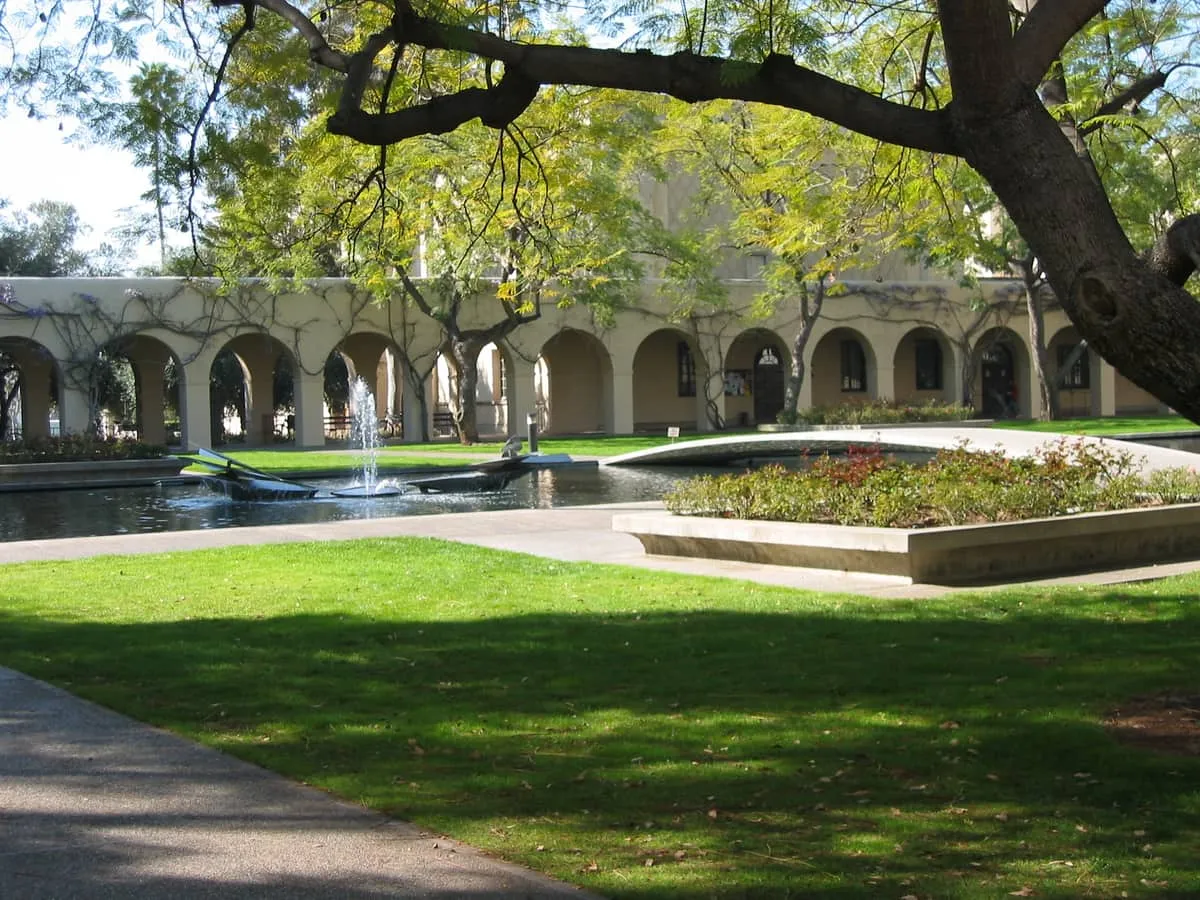
The Johns Hopkins University Applied Physics Laboratory, building 201, seen from the approach road

19th Annual Workshop on Spacecraft Flight Software

2026 Flight Software Workshop

Host
The Johns Hopkins University Applied Physics Laboratory
Location
Laurel, MD
Dates

This workshop has concluded

The Johns Hopkins University Applied Physics Laboratory in conjunction with The Jet Propulsion Laboratory, The Aerospace Corporation, The Southwest Research Institute and NASA Goddard Space Flight Center, is hosting the 19th Annual Workshop on Spacecraft Flight Software (FSW 2026) in Laurel, Maryland from March 23rd to 26th, 2026.

In the last several years there has been a significant increase in the next generation of flight system architectures for space. Some of the advancements have been in multicore, soft-core, FPGA’s, space computers, operating systems, flight software and machine learning. This presents many opportunities in the space industry, as well as some significant challenges.

We are looking forward to another great year of in-depth technical presentations of relevance to all Flight Software engineers. The general themes for FSW-26 are:

  • Resiliency, safety, and security
  • Artificial intelligence, machine learning, and onboard data processing
  • Space networking
  • Onboard data storage and representation
  • Flight software architectures, open-source software, frameworks, and software buses
  • Software enabled mission concepts
  • Digital twin, config management, and software enabled emulation
  • DevOps, continuous integration, and automated testing
  • FSW, embedded processor, and FPGA interactions
  • Flight Operating Systems
  • New languages (bring your non-C work)
  • Your hot FSW topic we haven’t listed!

We would like to encourage the community to get hands-on at FSW Workshop 2026! While we will continue our presentation tracks, we recommend considering submitting your hardware and software demonstration, as well as your workshop ideas.

If you haven’t already done so, subscribe to our e-mail list, opens in a new tab to get the latest information from our organizing committee.

Important dates

  1. — Completed

    Call for Abstracts

  2. — Completed

    Registration Opens

  3. — Completed

    Abstract Submission Deadline

  4. — Completed

    Abstract Acceptance Notification

  5. — Completed

    Presentation Submission Deadline

  6. — Completed

    Workshop

Keynote speakers

Elizabeth Turtle

Monday, March 23

Dr. Elizabeth Turtle

Principal Investigator, JHU/APL

Dragonfly: Robotic Aerial Exploration of Prebiotic Chemistry and Habitability on Saturn's moon Titan

Dr. Elizabeth (Zibi) Turtle is a planetary scientist at the Johns Hopkins Applied Physics Laboratory. She is the Principal Investigator for the Dragonfly New Frontiers mission to Titan and for the Europa Imaging System (EIS) cameras on the Europa Clipper mission. She also participated in the Galileo, Cassini, and Lunar Reconnaissance Orbiter missions.

Dr. Turtle’s research has focused on combining remote-sensing observations with numerical geophysical models to study geological structures and their implications for planetary surfaces, interiors, and evolution, including: tectonics and impact cratering on terrestrial planets and outer planet satellites, the thickness of Europa’s ice shell, the formation of Io’s mountains, and the nature of Titan’s landscape and weather.

She earned her PhD in Planetary Sciences from the University of Arizona, Tucson, and her BS in Physics from the Massachusetts Institute of Technology. In 2021, she was awarded the Claudia J. Alexander Prize by the American Astronomical Society Division for Planetary Sciences.

Scott Manley

Tuesday, March 24

Scott Manley

Science Communicator and Space Content Creator

Adventures in Flying Safe

Scientist, astrophysicist, programmer, and YouTube star, Scott is known for his space-themed YouTube channel where he brings science into video games and teaches kids of all ages the science math behind rocket science.

Originally from Scotland, Scott spent a decade in academia studying astrophysics and computational physics at the University of Glasgow and Armagh Observatory where he focused on small bodies in the solar system and specifically the probabilities of collision. He left research in 1999 to move to California and work in the technology industry.

When the video game Kerbal Space Program appeared, he became a public science figure through his YouTube videos explaining the game and the science involved. His videos have generated almost 800 million video views and 1,800,000 subscribers.

Manuel Maldonado

Wednesday, March 25

Manuel Maldonado

Software Systems Engineer, NASA Goddard Space Flight Center

GSFC Flight Software for Roman Space Telescope

Manuel D. Maldonado worked as the Roman Space Telescope (RST) (formerly known as WFIRST) Software Systems Engineer from 2017 until his retirement from NASA at the end of 2023. He currently works as a contractor Systems Engineer on RST and hopes to stay on the project until the RST Launch in 2026.

Prior to his RST work he was the Software Systems Engineer on the ICESat-2/ATLAS instrument and prior to that, he served as the Chief Engineer of the Software Engineering Division/Code 580 at NASA Goddard Space Flight Center.

Manuel has worked on numerous flight missions and roles including Solar Dynamics Observatory/Software Systems Engineer, Geoscience Laser Altimeter System (ICESat/GLAS Instrument)/Flight Software Product Development Lead, EO-1/WARP RSN Software Developer, TRMM and XTE C&DH Flight Software Test Lead Engineer.

Manuel received a Bachelor of Science Degree in Electrical Engineering from the University of Puerto Rico, a Master of Engineering Degree in Computer Science from Loyola College, and a Post-Masters Advanced Certificate in Computer Science from The Johns Hopkins University.

Rebecca Lowe

Thursday, March 26

Dr. Rebecca Lowe

Senior Research Fellow, George Mason University

What is the philosophy of space and why is it so important?

Dr Rebecca Lowe is Philosophy Senior Research Fellow at the Mercatus Center at George Mason University. A political philosopher, her primary research interests include rights, freedom, and equality. She also writes regularly on space, and until recently was Consulting Space Philosopher at a strategic space advisory firm. She is the former director of FREER, a UK think tank advancing economically and socially liberal ideas, and served as Research Director at an investment company for four years.

Lowe is currently working on two books, Freedom in Utopia and Speaking Freely. She publishes a Substack newsletter, the ends don’t justify the means, and hosts a podcast, Working Definition. Her recent space publications include an article about the value of space activity for Economic Affairs, a piece about commercial space activity for the American Philosophical Association, and a paper on lunar property rights for the Adam Smith Institute.

Schedule

All times are venue time (EDT).

Monday, March 23

  1. to · Breakfast/Check In · Building 201
  2. to

    FSW Workshop Introduction, Welcome & Logistics

    FSW Workshop Committee

  3. to Keynote

    Dragonfly: Robotic Aerial Exploration of Prebiotic Chemistry and Habitability on Saturn's moon Titan

    Dr. Elizabeth Turtle · JHU/APL

  4. to

    Implementation of Data-Driven Fault Recovery Actions for Gateway Vehicle Systems Manager

    Nicholas Ohi · NASA-JSC

  5. to · Break (15 min)
  6. to Demo

    Machine learning payload operations from the ground to space and back again with Mission Persistence

    Luis Chavier · Mission Control, Canada

  7. to

    Software-First Space Engineering: MBD & CI/CD in a DE Platform for Rapid Spacecraft Development

    Tatsuya Monji · Mitsubishi, Japan

  8. to Sponsor

    ENCORE & STAGE Ready for Flight

    Joel Brown · Odyssey

  9. to · Hosted Lunch (65 min)
  10. to

    BPF-Prime: A Verifiably Secure and Extensible Plugin Platform for Flight Software

    Haoda Wang · Columbia University

  11. to

    AI Testbed for Secure Space Deployment

    Bart Slowik · SylLab

  12. to Demo

    Distributed Consensus for Safe Two-Spacecraft Autonomy

    Toby Bell · Stanford University

  13. to · Break (15 min)
  14. to

    LLM-Assisted Automatic MC/DC Test Generation and Requirements Traceability for Long-Duration NASA Flight Software

    Jamie Kennedy · LDRA

  15. to

    How Linux helps our flight software move to the next step

    Simon Corbin · CNES, France

  16. to Sponsor

    SpaceWire and SpaceFibre 2026

    Dave Gibson · STAR-Dundee, UK

  17. to · Break (15 min)
  18. to

    C as an Electronic Datasheet

    Samuel Price · NASA-GSFC

  19. to

    Lunar Sim Supervisor: Runtime Assurance for a Lunar Flight Dynamics Drone

    Steven Schierman · Atlas Autonomous Systems

  20. to

    Closing Remarks

    FSW Workshop Committee

Tuesday, March 24

  1. to · Breakfast · Building 201
  2. to

    FSW Workshop Introduction

    FSW Workshop Committee

  3. to Keynote

    Adventures in Flying Safe

    Scott Manley · Science Communicator and Space Content Creator on YouTube, Manley Media

  4. to

    HENON’s Autonomous Flight Software for Deep Space Maneuvering and Real-Time Space Weather Alerting

    Alessandro Lovesio · Argotec, Italy

  5. to

    Edge AI Inferencing: A Comparison of llama.cpp and vLLM

    Kush Gupta - virtual · RedHat

  6. to · Break (15 mins)
  7. to Demo

    NixOS in Space and on the Ground

    Sascha Wise · Stoke Space

  8. to Sponsor

    In a World Where Code is Cheap, Trust is Expensive

    Matt Rhodes · MathWorks

  9. to

    Post Quantum Cryptography for RISC-V Space Systems

    Dr. Leonidas Kosmidis · Barcelona Supercomputing Center (BSC)

  10. to · Hosted Lunch (70 min)
  11. to

    Embedded AI Agents For Flight Systems

    George Williams · Armijo Innovations

  12. to

    Innovations in Automation, Tools, and Processes for Europa Clipper Flight

    Cindy Oda, Bevin Duckett - Virtual · NASA-JPL

  13. to

    LLM-Based Software Test Generation

    Weizhe Xu, Dr. Fanxin Kong · University of Notre Dame

  14. to · Break (15 mins)
  15. to Demo

    Transforming Independent Verification and Validation with AI Assisted Flight Software Analysis

    Chris Williams, Michael Lemasters - Virtual · NASA IV&V

  16. to

    Onboard Autonomous Computing to Enable Orbital Detection of Hazards

    Douglas Franz · MyRadar

  17. to

    DRAGOMAN - Tools to exchange information between XTCE and ROS2

    Ana Huaman Quispe - virtual · Traclabs

  18. to · Break (15 mins)
  19. to Sponsor

    GR765 Software Ecosystem Updates

    Daniel Hellström · FrontGrade Gaisler

  20. to

    Flight Software Under Constraints: Lessons from SAOCOM and the Evolution of Argentina’s Onboard Software Capability

    Matias Pinedo, Nicolás E. Horro · INVAP S.E., Argentina

  21. to

    The Asp Scripting Platform for Embedded Systems

    Allen Taylor · Canadensys Aerospace Corporation

  22. to

    Closing Remarks

    FSW Workshop Committee

  23. to · Hosted Networking Dinner

Wednesday, March 25

  1. to · Breakfast · Building 201
  2. to

    FSW Workshop Introduction

    FSW Workshop Committee

  3. to Keynote

    GSFC Flight Software for Roman Space Telescope

    Manuel Maldonado · NASA-GSFC

  4. to

    Challenges Of Gateway's Lunar Link and Use of cFS – balancing SW reusability with performance needs

    Andrei Oganessian · ESA, Netherlands

  5. to

    In-Flight Demonstrations on a Small Satellite

    Jonathan Famous - Virtual · Lockheed

  6. to · Break (15 mins)
  7. to Demo

    From ONNX File to Space-Grade Multi-Core AI on RTEMS6: A Practical Demonstration

    Dr. Pablo Ghiglino · Klepsydra,Switzerland

  8. to Sponsor

    RTEMS State of the Solar System

    Dr. Joel Sherrill · OAR

  9. to

    A Sky Full Of Stars – Porting Synthetic Tracking to Onboard GPUs

    Kevin Sears · JHU/APL

  10. to · Hosted Lunch (70 min)
  11. to Demo

    Developing Effective Data Generation Strategies for Vision-Based Navigation using the Mission Design Simulator (MDS)

    Marius Neuhalfen · Blackswan Space

  12. to

    Lightweight Multi-Sensor Fusion for Autonomous Lunar Rover Navigation on Embedded Hardware

    Sam Yu · Lothan Space

  13. to

    Lessons Learned in a Microservices Message Passing Architecture for CesiumAstro Flight Software

    Dr. Dylan Pfeifer · Cesium Astro

  14. to · Break (15 mins)
  15. to

    LiME: Real-Time Modeling On Linux Made Easy

    Filip Markovic, Irfan Sljivo · University of Southampton/ NASA- Ames

  16. to

    Encrypting Spacecraft Communications: Modular Implementation of Uplink and Downlink Encryption in JPL’s F Prime Fight Software Framework

    Lior Attias - Virtual · NASA-JPL

  17. to

    Lessons learned from writing rocket firmware in Rust

    Maia Herrington · Stoke Space

  18. to · Break (15 mins)
  19. to Sponsor

    Deep Space on a budget – adapting commercial avionics and FSW for NASA’s twin ESCAPDE spacecraft

    Starla Talbot · RocketLab

  20. to

    Ultra-Fast, Low-Overhead SpaceFibre Communication for System-on-Chips

    Dave Gibson · STAR-Dundee, UK

  21. to

    The NASA cFS 2.0 and Beyond

    Ashok Prajapati · NASA-GSFC

  22. to

    Closing Remarks

    FSW Workshop Committee

  23. to · Networking Social

Thursday, March 26

  1. to · Dragon Fly Tour Badge Pick-up · B201 Security Desk
  2. to · Breakfast · Building 201
  3. to

    FSW Workshop Introduction

    FSW Workshop Committee

  4. to Demo

    Integration of Simulink-Generated Systems with NASA’s cFS

    Joseba Vara Murillo · Universidad Carlos III de Madrid (UC3M), Spain

  5. to

    Fpy: An Advanced Sequencing Language for F Prime

    Zimri Leisher · University of Michigan

  6. to

    Microsegmentation of Core Flight System (cFS) to Secure Satellite Busses

    Henry Haswell -Virtual · SWRI

  7. to · Break (15 mins)
  8. to

    A Code First Approach to Space Network Management with Rust

    Rich Landau · JHU/APL

  9. to Keynote

    What is the philosophy of space and why is it so important?

    Dr. Rebecca Lowe · Senior Research Fellow, George Mason University

  10. to

    End of Workshop - Closing Remarks

    FSW Workshop Committee

  11. to · Hosted Lunch / Demo
  12. to · Facility Tour - Dragonfly

Venue and Travel

There is not a reserved block of rooms for the workshop. These hotels are suggestions only, based on accessibility to the venue.

Frequently Asked Questions

How long are presentations?

Presentations are 25 minutes long. Presenters may choose to include Q&A within this given time.

What is the refund policy?

We do not provide refunds for the FSW Workshop, but tickets may be transferred to someone else for this year’s workshop. Please reach out for more information.

What options for interactivity, like Q&A, will be supported?

Questions can be submitted via Slack Workspace or in person. More details will be provided prior to the conference.

When will talk recordings become available online?

Live talk recordings this year will not become available immediately after the presentation. We aim to publish all live presentation recordings at the end of the workshop week.

Organizing committee

General Co-Chairs
Eugene Fodor
Jared Quilty
Technical Co-Chairs
Luis Rodriguez
Robert Kalnins
Violet Torossian
Operations/Organizing Co-Chairs
David Edell
Miles Segler
Nick Lin
Communication Co-Chairs
Eddie Benowitz
Taleen Sarkissian
Website Co-Chairs
Joseph Gruber
Taleen Sarkissian
Networking Co-Chairs
Ashok Prajapati
Eddie Benowitz
Finance Co-Chairs
Chris Monaco
Robert Kalnins
Sponsor Relations Co-Chairs
Chris Monaco
Robert Klar
Stephen Escobedo

Sponsors

Additional sponsorship opportunities exist for the 2026 Workshop. Please email inquiries to Sponsor Relations at sponsor@flightsoftware.org.